


Hope Island QLD - Kitchen Mould Infestation Restored By Biodec
- Isaac Pickering
- May 29, 2025
- 1 min read

Updated: Jun 2, 2025

Mould had taken hold in:
The back of the base cabinetry
Wall plasterboard and insulation
Timber framing
IICRC S520 (2021), Section 12.2.2:"Where microbial growth is suspected or identified, an appropriate containment strategy should be established to prevent cross-contamination and occupant exposure."
Biodec’s Remediation Process
1. Containment Setup with Negative Air Pressure
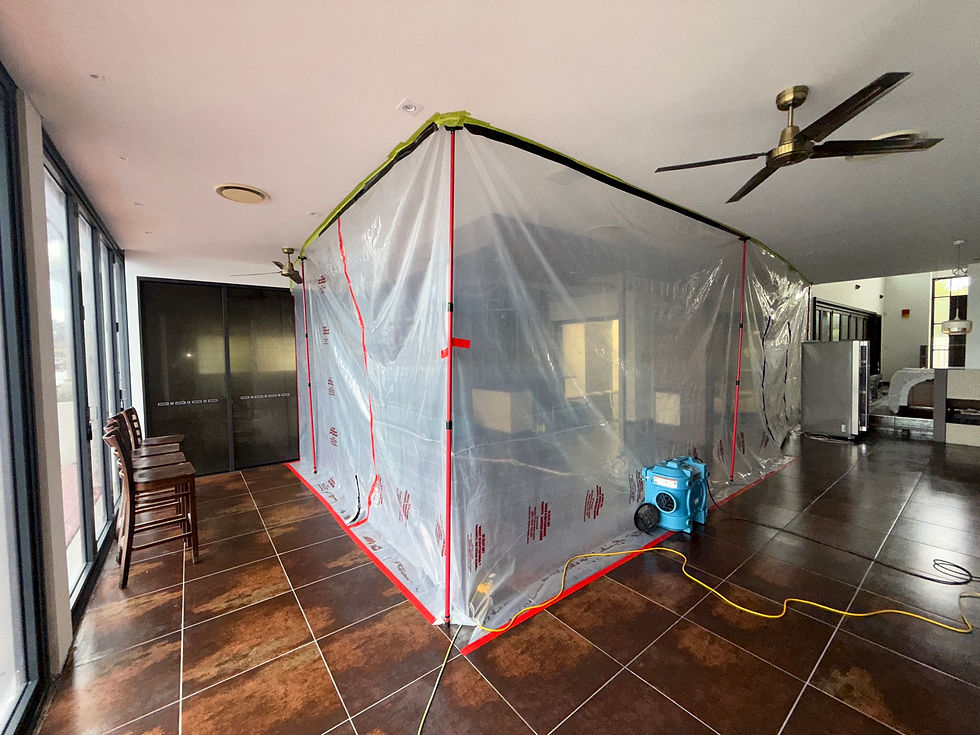
We established a fully sealed containment area around the affected kitchen zone, complete with zippered access, poly sheeting, and air filtration devices (AFDs) configured to create negative air pressure.
“Negative pressure containment is essential to prevent the migration of airborne mould spores to unaffected areas.”— IICRC S520, Section 12.3.4.1
This step is critical in any mould remediation project—especially in occupied homes.


Pictured: A containment was installed around the restoration site, and Air Filtration Devices were used to create negative air pressure within the contained space, further ensuring mould spores are unable to contaminate nearby areas.
2. Removal of Contaminated Materials
All lower kitchen cabinetry was carefully removed and disposed of.
The affected plasterboard and insulation were removed.
All porous and semi-porous materials showing visible or suspected mould were removed under containment.
3. HEPA Vacuuming and Antimicrobial Treatment
Once the affected materials were removed, all remaining framing and surfaces inside the contained area were:
HEPA-vacuumed to remove settled spores
Wire-brushed/sanded where necessary to remove residual mould from framing
Treated with a broad-spectrum antimicrobial agent


Comments